
- Blog Home
- Recent Posts
- Sending Love and Supplies to Children in Need
- Generation to Generation Society: Making Waves in ...
- The Joyce Eisenberg-Keefer Medical Center Welcomes...
- The Meaning of the High Holy Days
- Save the Date! Celebration of Life: Reflections 2015
- Rabbi Karen Bender Joins the Journey for Justice
- Hebrew Union College Students Visit the Home
- Residents Enjoy Films at the Laemmle Theater
- The Joyce Eisenberg Keefer Medical Center Centenar...
- Save the Date for the Walk of Ages XVI
- Post Categories
- Posts by Author
- Blog Archives


Los Angeles Jewish Home's Blog
Tuesday, October 4, 2011
Joanne Handy — The Tireless Aging Services Advocate
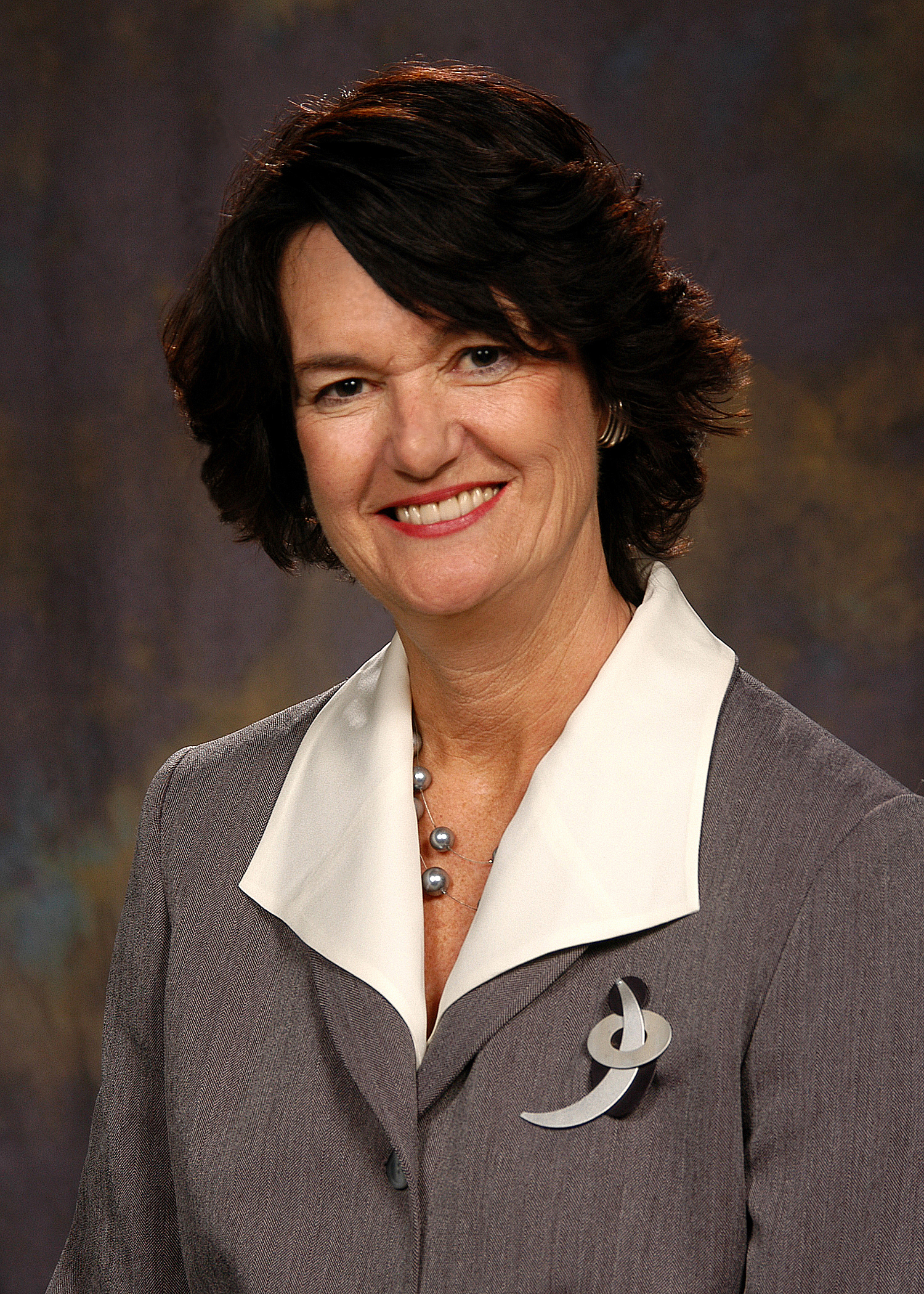
At the Los Angeles Jewish Home’s 14th annual Sarnat Symposium, Aging Services of California president and CEO Joanne Handy, one of the leading experts on senior care advocacy, will be discussing all of the possible changes to senior care funding in her lecture, Impact of Federal Healthcare Reform on Aging Services.
Handy has been at the forefront of senior healthcare for decades. In the past, she worked for organizations like the Visiting Nurse Association of Boston, the Institute of Aging in San Francisco, and UCSF – Mount Zion Medical Center. She also was a national board member of AARP.
Today, as head of the premier senior care advocacy organization in the state, Handy raises awareness and develops strategies to improve care for aging Californians. For those who don’t know, Aging Services of California is the state affiliate of LeadingAge, formerly known as AAHSA.
If you would like to hear Joanne Handy speak at the Los Angeles Jewish Home’s 14th annual Sarnat Symposium on Wednesday, October 26, 2011, visit the Sarnat Symposium webpage and register today.
Labels: AAHSA, Aging Services of California, Federal, Funding, Government, Healthcare, Jewish Home for the Aging, Joanne Handy, LeadingAge, Los Angeles Jewish Home, Sarnat Symposium, Senior Care
Thursday, September 15, 2011
Guess Who's on the Cover of The Jewish Journal!

The Journal's Ryan Smith wrote an incredible article chronicling the Los Angeles Jewish Home's growth and evolution, and it's impact on LA's Jewish community. Smith also reports how recent state and federal budget cuts influence the Jewish Home's plans to care for 5,000 seniors within the next five years.
When the Jewish community migrated to West Los Angeles and the San Fernando Valley, the Jewish Home traveled with it. Leaders purchased 11 acres on Victory Boulevard in Reseda in 1967 for what is now known as its Eisenberg Village. In 1979, it merged with the nearby Menorah Village on Tampa Avenue, which dated back to the 1930s, to create a second campus in the Valley.
We're absolutely delighted to receive this excellent coverage from such a respected publication. As the Jewish Home begins celebrating its 100th birthday, we'll continue moving forward — providing world class senior healthcare for another century.
“When I found out that the Jewish Home would accept me, oh my God, I can’t begin to tell you how lucky I felt,” said Marilyn Hirsch, 81, who moved in more than five years ago after falling and encountering other health problems.
“I’m not a practicing Jew, but … I was raised Jewish,” she said. “I came here to be with my own. I feel comfortable with them. I wanted my last days to be with my own.”
Read the full article, Turning 100: Los Angeles Jewish Home has ambitious growth plans.
Labels: 100, Budget Cuts, Centennial, Cover Story, Elderly, History, Jewish Home Services, Jewish Journal, Los Angeles Jewish Home, Ryan Smith, Seniors, Staff
Tuesday, August 30, 2011
Q&A with Molly Forrest
Looking back, what stands out as the most notable achievements for the Home?
The expansion of the Home's capacity to help more seniors — both in-residence and through our community-based services — has been a significant accomplishment.
In 2002, we opened our award-winning Goldenberg•Ziman Special Care Center, to treat seniors with dementia. In 2007, the Joyce Eisenberg-Keefer Medical Center opened, offering a 10-bed acute geriatric psychiatric hospital and 239 skilled nursing beds. Last years, Fountainview at Eisenberg Village, featuring luxury living for independent seniors, opened.
The Home also developed a number of community-based programs. These include Skirball Hospice, the Jewish Home Center for Palliative Medicine and short-term rehabilitative care for seniors. In total, last year the Jewish Home helped over 2,300 seniors, either on our campuses or in their own homes.
Opened in 2007, the Annenberg School of Nursing has prepared almost 60 vocational nursing students to start new nursing careers.
What have been your greatest challenges as you led the Home to expand services and build new facilities?
With a population of 600,000, the Los Angeles Jewish community has the smallest capacity for seniors of any Jewish Home in the nation on a per-capita basis. The senior population grows daily, with Baby Boomers swelling the numbers. And, thanks to benefits of modern medicine, we enjoy longer life spans and have more "super elderly" (85+), many with complicated medical or social needs.
Adequate funding to maintain our quality programs and services has been, and remains, a challenge. 70% of our residents are on government assistance or welfare. The proposed Federal and State cutbacks in Medicare and Medi-Cal will impact us. In particular, the recently passed California budget will reduce our welfare payments by about $3-3.5 million.
Our "greatest challenge" becomes how we can expand responsibly, and serve more seniors with less reliance upon governmental support for long-term care?
How is the Home responding to these financial pressures?
Our mission — to provide excellence in senior healthcare reflective of Jewish values — is our cornerstone.
The cutbacks and limitations in benefits for seniors have hurt. We have implemented difficult changes. We re-assigned staff, reconfigured positions and, unfortunately, laid off about 20 from the 1,100 staff we employ. We also renegotiated contracts and continue to spend money prudently.
With careful planning and support from our wonderful board and valued friends, we continue providing exceptional senior care and have grown to serve more, while reducing reliance on governmental funding.
What does the future hold for the Jewish Home?
Next year, as we celebrate our Centennial, we will open the first site for the Brandman Centers for Senior Care (BCSC). This is a new program that combines Medicare and Medi-Cal benefits to assure needy seniors can live safely at home with coordinated, quality healthcare and services.
We have plans for the Gonda Health Aging Westside campus, as well as new projects for the Grancell Village and Hirsch Family campuses in the Valley. We are also planning for an in-home concierge program focused on helping seniors live in their own homes.
Once all our plans are completed, our Home will serve 5,000 seniors every day! It is up to us to meet the needs of an aging population with careful foresight, management and, yes, the ongoing generosity of hands, hearts, and dollars.
Labels: Achievements, Funding, Future, Jewish Home News, Los Angeles Jewish Home, Molly Forrest, Palliative Medicine, Q and A, Seniors, Super Elderly
Wednesday, July 20, 2011
No More Driving

Los Angeles Jewish Home resident
Since becoming a resident of the Los Angeles Jewish Home in September 2009, I cannot innumerate the countless benefits of living in this fabulous facility. However, I must admit there is one phase of my past that I miss tremendously.
I was an excellent driver for over 55 years, with a commendable record. In fact, in most recent years when many of my friends had to give up driving, I was the “designated driver.” Driving on the freeway, driving at night, escorting my friends to countless doctor appointments, shopping trips—they were no challenge for me.
And then, lo and behold, my own driving abilities began to falter. Before I knew it I had to forsake my driver’s license and, alas, my life changed. The freedom of hopping in the car and running my errands at will was indeed a privilege. One doesn’t realize the extent of that freedom until you can no longer exercise it.
I promised myself that when that day came, I would be noble and accept it valiantly. But that is easier said than done. Often times I find myself in the “oh dear” mood, but fortunately I’ve overcome it quickly. I realize there are far worse compromises in life than not driving.
Talking to other residents here at the Jewish Home, we all have the same lament: “Oh, how I miss my driving!”
But we have all adjusted and take advantage of our volunteer drivers, city-ride, Access, taxis—yes, life goes on, even without a driver’s license.
Labels: Aging, Car, Driver, Driver's License, Driving, Freedom, Health, Independence, Los Angeles Jewish Home, Nettie Freeman, Residents, Seniors, Staff
Tuesday, July 19, 2011
Longest Day of Golf 2011: Play by Play
By Jason Weiss
Well, I did it!
It took 12 grueling hours, ten bottles of water, six golf balls, four protein bars, three bottles of Gatorade, and a partridge in a pear tree.
In total, it took me 463 strokes to get around El Caballero Country Club six times. That number was assisted by both Mother Nature deciding to take it easy on me, and a four-foot gimme radius for the first three rounds.
I present to you a running diary of thoughts, highlights, and achievements throughout the marathon. Note: all times are approximate.
5:35am: BEEP BEEP BEEP. As my alarm goes off, I can only think to quote Ron Burgundy in the movie Anchorman: "I immediately regret this decision."
6:37am: I start on the third hole (don't worry, I went back to finish the first two holes before lunch) with a monster tee shot down the left side of the fairway. I hit a wedge to the middle of the green and two putt for a par. One down, 107 to go. "Oy vey," I thought. After all, we are playing for the Los Angeles Jewish Home.
7:50am: It is every golfer's instinct to drive from the 18th green into the clubhouse, where an ice cold adult beverage is usually ripe to be consumed. Not only this day. An immediate right turn and back to the first tee. First round statistics: I shot 73 (remember the four foot gimme radius) with three birdies (No gimmes on birdie putts) and played one hour and twenty minutes.
9:20am: Round two is in the books. This was probably my least favorite round. The light at the end of the tunnel was too far in the distance, and the excitement of what I signed up for was in the rear view mirror. I made no birdies, shot a respectable 79, and was just happy to get it out of the way in 90 minutes. Thought for the second round: "I've just played 36 holes at El Cab in the time that it takes most members to play 12 holes. This is how El Cab should be played!"
9:40-9:55am: My best three-hold stretch of the day. On holes 39-41, I went birdie-birdie, birdie, including a 130 yard bunker shot to eight inches. I could hear my dad saying "I hate you" after the third tap in. I shot 75 in round three. Halfway home.
11:55am: Here's a question that I had never thought about before Monday: How many consecutive holes must one play in the same golf cart before the batter light turns on? Answer: I first noticed it on hole 60. At 63, I changed carts. Time for lunch.
12:00pm: Lunch. A turkey sandwich, fruit salad, pasta salad, chips, and a slice of apple pie were accompanied by a nice speech from Jewish Home CEO-President Molly Forrest. I don't really remember what she said. All I remember thinking was "Ahhhh, air conditioning."
1:05pm: I made a friend at lunch, and we decided to play our last two rounds together. His name was Jason as well, and was the second youngest participant, at 42. He was a really nice guy, but not such a great golfer. I tried to give him a bunker lesson. It didn't work. My lesson to him for the rest of the day: "Jason, when you hit in the bunker, just pick it up. We don't have time for you to hit four shots in each bunker." He agreed. Round four: 77.
2:40pm: Second wall. Hole 80. I don't know what you know about a golf swing, but a golf swing is more body than arms. The two have to work together for the ball to be hit far and straight. My arms and body are no longer working together. If my golf swing was Brad Pitt and Jennifer Aniston circa 2005 before lunch, it is most certainly Brad Pitt and Jennifer Aniston circa 2011 now. The honeymoon is over...this is no longer fun. Round five: a really surprising 78.
3:15pm: Hold 86. "Another $200 for the Jewish Home" was the mantra that Jason and I kept repeating after every hole as we played in the heat of the day. "Keep grinding."
4:15pm: As I stick my tee into the tee box on the first hole for the SIXTH and final time, I realize that I've made it. Ninety holes down. Only one more round to go. If my body wasn't shaking, I would've leaped for joy.
6:45pm: SHANK!
6:55pm: Victory! As my four foot par putt hit the bottom of the 18th hole, my day was over. I had done it. One hundred and eight holes of golf in one day. I raised my arms as best I could and triumphantly high fived my playing partner for the afternoon. Round six: 81. Four Hundred and Sixty Three total strokes.
 As I type this with my bruised hands, while sitting on my sore rear end, which is still not as sore as my legs and feet, I am overcome with a sense of pride and humbled by the generosity of everyone who supported me throughout this challenge.
When I decided that I was going to raise money on behalf of the Home for this event, I would have never anticipated that I could raise over $10,000. I am truly touched by this feat.
I would like to thank you personally for all of your support. I look forward to playing in this event for years to come, and your support is greatly appreciated.
If you'd like to talk about this event, ask any other question about the event or the Home, please feel free to leave a comment.
Thanks again!!!
Labels: El Caballero Country Club, Fund Development, Fundraising, Golf, Jason Weiss, Jewish Home, Longest Day of Golf, Los Angeles Jewish Home, Marathon, Philanthropy, Putt, Seniors, Staff, Stroke, Swing